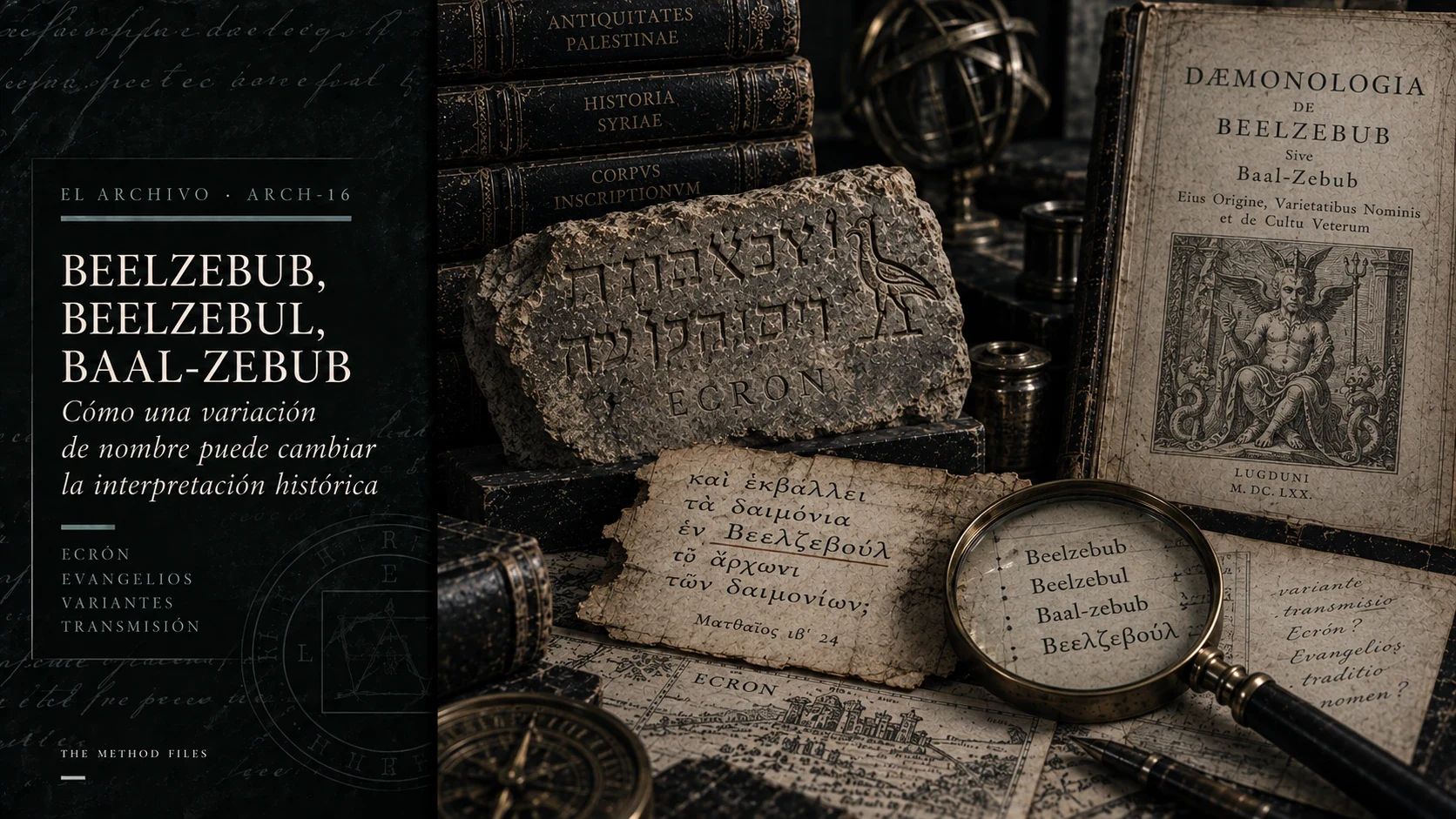
THE ARCHIVE · ARCH-16
BEELZEBUB, BEELZEBUL, BAAL-ZEBUB
How a variation in a name can change historical interpretation
THE METHOD FILES
THE ARCHIVE
How a variation in a name can change historical interpretation.
A name can seem stable when read from the present. Baal-Zebub, Beelzebul, Beelzebub and Belzébuth are often treated as mere spelling variants for a single familiar figure: Beelzebub. Yet the sources do not always place them in the same setting, with the same function or within the same religious system. In 2 Kings, we encounter a deity associated with Ekron. In the Gospels, Beelzebul belongs to the vocabulary of the demonic world and is called prince of demons. In Latin tradition and later translations, Beelzebub becomes an exceptionally influential form of the name.
The problem is not deciding which spelling is ‘true’. The historical task is to reconstruct which text uses each form, what it means in context and what happened when scribes, translators, commentators and demonologists inherited the name. A single consonant may not change a person; in a textual tradition spanning centuries, it can change our explanation of an entire genealogy.
This article continues ‘Beelzebub was not born in Hell’, but narrows the focus. It no longer asks where Beelzebub comes from in general. It asks how a name moves from Ekron to the Gospels and then to European demonology without requiring us to pretend there is perfect continuity where the sources show transformation, translation and debate.
THE ARGUMENT
A name does not follow a straight line
Baal-Zebub, Beelzebul and Beelzebub belong to the same history of reception, but should not be treated as interchangeable labels without date or context. The name changes as its function changes. In 2 Kings 1, Baal-Zebub is ‘the god of Ekron’, whom Ahaziah consults. In Matthew, Mark and Luke, Beelzebul appears in an accusation concerning exorcism and is described as prince of demons. Jesus’s reply moves immediately to Satan and a divided kingdom. Centuries later, Latin tradition and several translations establish Beelzebub, while modern demonology adds ranks, biographies and images absent from the earliest texts.
Continuity exists, but not as a simple identity. Research must distinguish five layers: form of the name, language and witness, function within the text, later interpretation and visual reception. Skipping one produces a familiar online mistake: taking the most fully developed nineteenth-century figure and projecting it onto 2 Kings as though everything had been there from the outset.
2 KINGS 1 · THE STARTING POINT
Baal-Zebub is the god of Ekron, not the prince of demons
The earliest reference framing this investigation is in 2 Kings 1. Ahaziah, king of Israel, falls and is injured. He sends messengers to consult Baal-Zebub, god of Ekron, about his recovery. The narrative condemns the consultation because the king seeks an answer outside the God of Israel. But the evidence relevant here must remain limited: the text presents Baal-Zebub as a deity of Ekron associated with an oracular enquiry.
No infernal hierarchy appears yet. The passage does not call Baal-Zebub Satan, describe him as prince of demons or supply the demonological biography later sources give Beelzebub. ‘Beelzebub was not born in Hell’ established this distinction; here it becomes our first rule: preserve the name’s function within each historical layer.
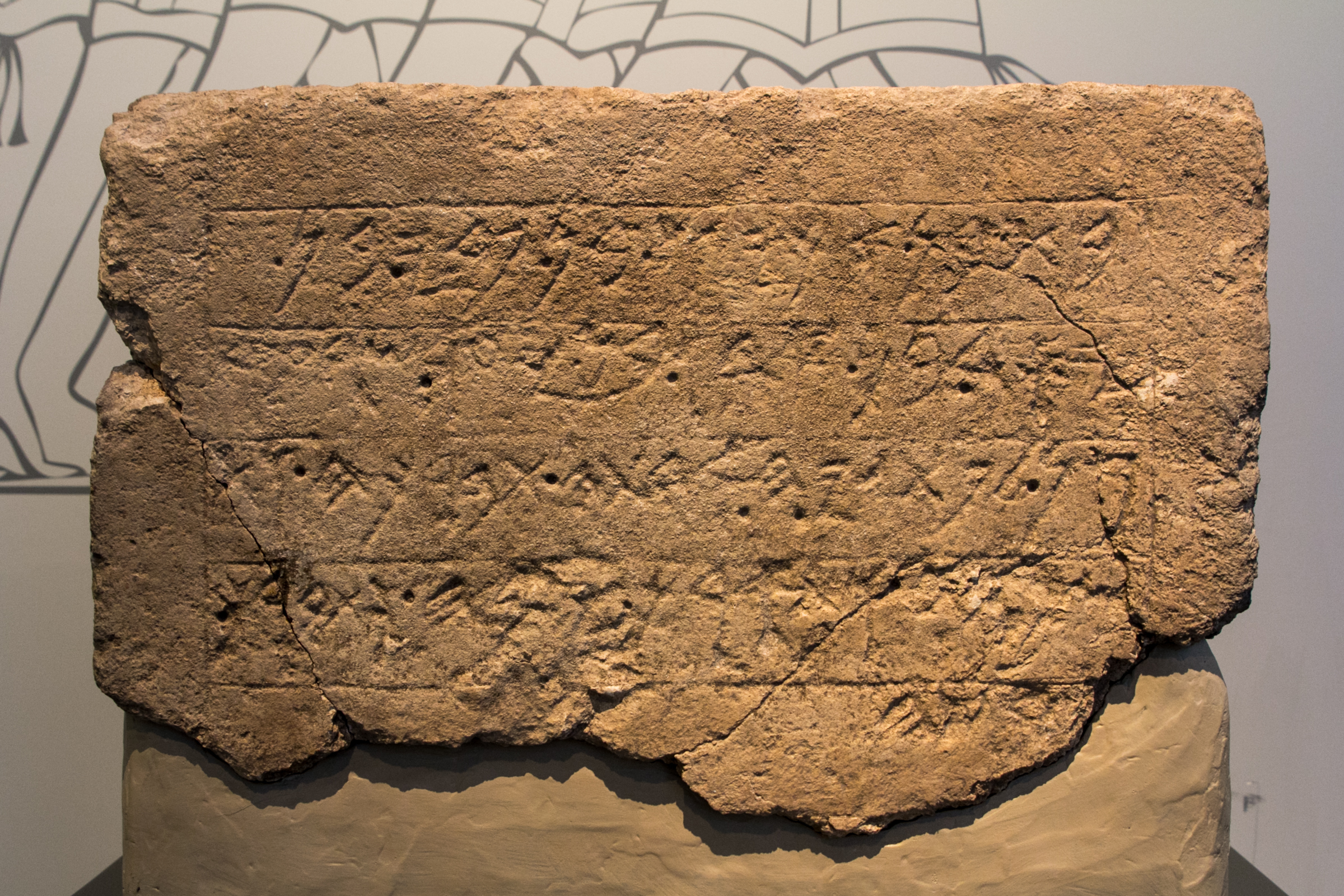
Archaeology helps contextualise Ekron without resolving the name’s problem by itself. The seventh-century BCE Ekron royal inscription confirms the city, its rulers and a cultic setting. But the surviving inscription does not name Baal-Zebub. Its value lies in establishing Ekron as a tangible historical context; it is not an inscription from a supposed ‘temple of Beelzebub’. Confusing the two would make archaeology say more than the object actually does.
THE FIRST PHILOLOGICAL PROBLEM
‘Lord of the flies’, or an alteration of another title?
The Hebrew form transmitted in 2 Kings has generated a particularly long debate. Read directly, Baal-Zebub has traditionally been understood as ‘Baal’ or ‘lord of the flies’. This reading explains the later association with the fly and eventually gained enormous cultural force.
A substantial strand of scholarship, however, proposes that the form in 2 Kings may contain a polemical pun on a title such as Baal-Zebul, associated with ‘Prince Baal’ or an elevated or heavenly dwelling. Richard S. Hess summarises this interpretation as a possible derogatory wordplay and refers to modern philological debate. Other scholars have defended different explanations. Contemporary discussion also includes proposals taking more seriously the possibility that ‘flies’ was a genuine functional element of the title.
This article therefore does not turn an etymological hypothesis into fact. We can securely document which form 2 Kings transmits and explain the main interpretations. We cannot state that the original name ‘was undoubtedly Baal-Zebul’ and was later distorted, or claim the opposite with equal certainty. Where philology remains divided, uncertainty is part of the result.
THE GOSPELS · THE FUNCTION CHANGES
Beelzebul enters the language of the demonic kingdom
The scene is different in the Synoptic Gospels. Matthew 12:24 presents Beelzebul as ‘prince of demons’. Mark 3:22 preserves the accusation that Jesus acts through Beelzebul and the power of the prince of demons. Luke 11:15 repeats the same function. We are no longer reading an enquiry addressed to the god of a Philistine city, but a controversy about exorcism and demonic authority.
The next step matters still more. In Matthew 12:26, Jesus replies that if Satan casts out Satan, his kingdom is divided. Mark makes a comparable transition. The text functionally connects the accusation concerning Beelzebul with Satan’s kingdom. We can therefore say that within this Gospel controversy, Beelzebul occupies a position that can be explained through Satan. We cannot retrospectively erase the differences between the Baal-Zebub of 2 Kings and every later doctrine concerning Satan.
Recent research on Mark highlights precisely this tension. Beelzebul is an obscure name with widely differing proposed etymologies; what the passage clearly does is present him as a prominent demonic figure and have Jesus reframe the discussion in terms of Satan. That textual evidence is firmer than any overconfident reconstruction of the name’s origin.
AN EARLY WITNESS · PAPYRUS 21
Study a variant in manuscripts, not in modern recollections
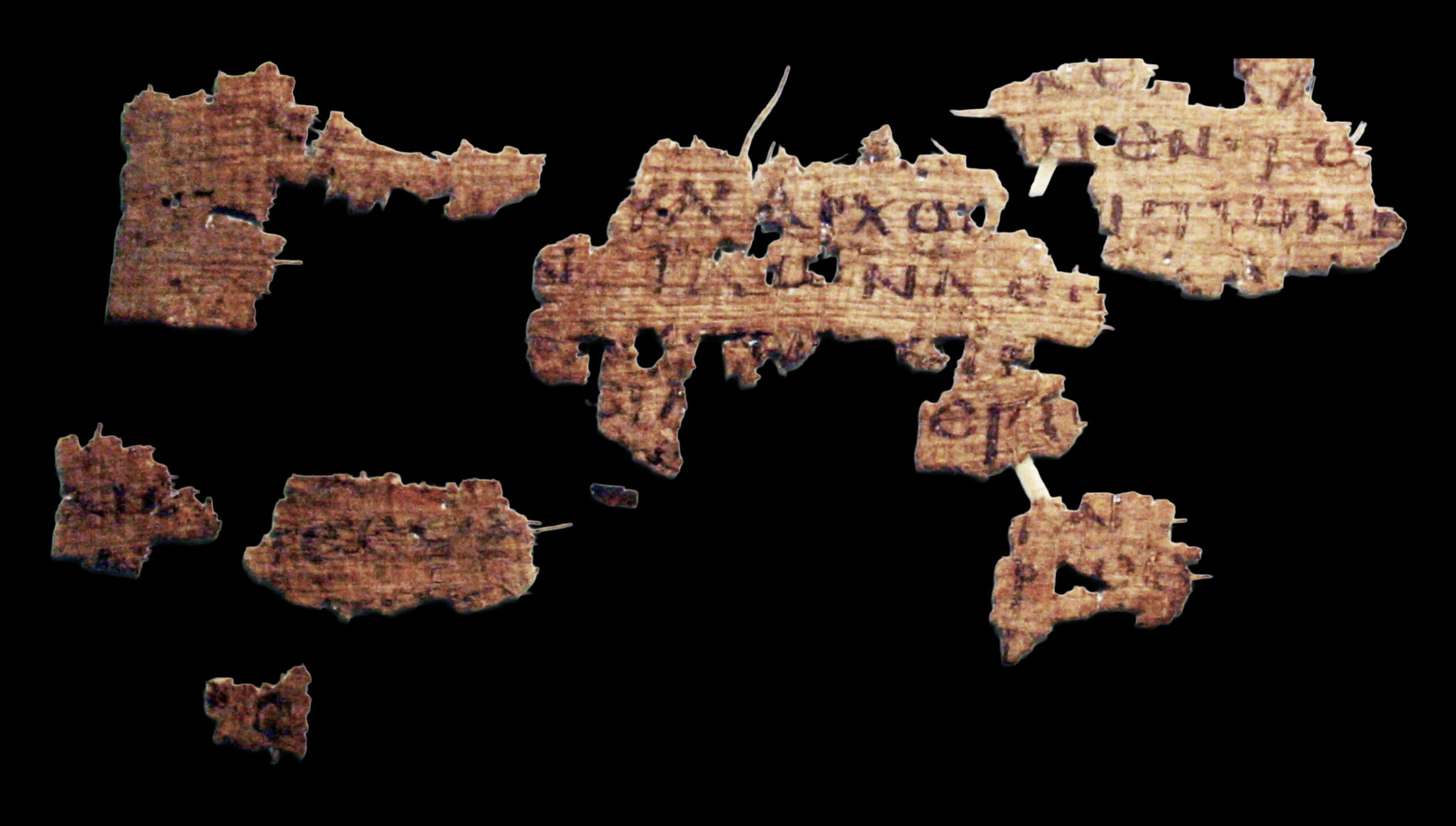
Papyrus 21, P. Oxy. 1227, preserves Matthew 12:24–26 and 32–33. The fragment is an early witness to the passage containing the accusation involving Beelzebul and, a few lines later, the reply concerning Satan. Its significance here is not that it is ‘the original’ Gospel, but that it demonstrates the right method: a textual reading rests on particular, dated and identified witnesses.
The current critical Greek text gives Βεελζεβοὺλ in Matthew 12:24. The same form appears in Mark 3:22 and Luke 11:15. It is therefore particularly problematic to treat Beelzebub as the only New Testament form. Beelzebub is historically important, but how it came to dominate particular translations and traditions is part of the question, not a reason to silently replace the Greek witnesses’ form.
LATIN AND TRANSLATION
Beelzebub becomes a profoundly influential form
Latin transmission makes the change particularly clear. The Clementine Vulgate prints Beelzebub in Matthew 12:24. The modern Nova Vulgata, by contrast, gives Beelzebul. This is not a decorative detail: two important stages of a Latin tradition present different forms of the same name.
Western translations inherited different choices. Some retained Beelzebub for centuries; others, following modern critical Greek editions, prefer Beelzebul. A reader encountering one form from childhood may feel that the other is a mistake or a different name. ‘When a translation creates a tradition’ showed how translation can become an active layer of tradition. This article applies that principle to one name and reveals its cumulative effect.
The right question is therefore not ‘what is his real name?’, as though one answer existed outside textual history. It is: which form appears in this witness, language and edition, and what consequences followed from its reception?
NINETEENTH CENTURY · THE NAME ACQUIRES A BODY
Belzébuth and Louis Le Breton’s fly
The sixth edition of the Dictionnaire Infernal in 1863 offers an extraordinarily influential visual culmination. Louis Le Breton’s illustration presents Belzébuth as a large demonic fly. The historical image record itself preserves several forms — Belzebuth, Belzebub, Beelzebuth — around the same iconographic reception.
The traditional meaning ‘lord of the flies’ becomes more than a philological debate: it becomes a memorable image. The engraving’s power helps establish an appearance that may now seem ancestral. It is not. It is a documented nineteenth-century graphic decision within a particular edition.
This does not diminish its value. It makes the engraving a source of major importance for studying modern reception. The caption must identify exactly what it is: Louis Le Breton, Dictionnaire Infernal, sixth edition, 1863. It is neither a biblical depiction of Baal-Zebub nor a portrait transmitted from Ekron.

MYTH VS SOURCE
‘Baal-Zebub was always the same demon’
The phrase seems convenient because it connects everything at once: Philistine god, the Gospels’ Beelzebul, Satan, medieval demonology and nineteenth-century Belzébuth. The problem is that it turns a history of transformation into a continuous biography.
The source in 2 Kings gives us a deity of Ekron. The Gospels give us Beelzebul as prince of demons and a reply framed through Satan. Latin and vernacular traditions establish different spellings. European demonology and literature expand rank, relationships and personality. Illustrators finally provide an iconography. Each layer inherits something and adds something new.
The rigorous formulation is less spectacular and more interesting: Beelzebub results from a long history of reception in which name, function and representation change. Continuity exists because traditions read one another. Identity cannot be assumed to be established in the same way for every period.
METHOD
How to read a changing name
This article proposes a simple sequence. First, copy the name’s exact form from the source consulted. Second, identify language, date and witness. Third, describe the function the text itself assigns. Fourth, separate etymological hypotheses from documented facts. Fifth, trace which translations and commentaries establish a variant. Sixth, observe when ranks, genealogies and images absent from the earlier layer appear.
This method avoids two opposite mistakes. One fragments too far, pretending that Baal-Zebub, Beelzebul and Beelzebub have no historical relationship. The other merges them too soon, describing an identical entity with the same rank and appearance from antiquity to the nineteenth century. The actual history lies between those extremes: continuity of reception and transformation of meaning.
ARCHIVE CONNECTIONS
Following the name’s history
BEELZEBUB WAS NOT BORN IN HELL
The Beelzebub article traces his broad transformation from Ekron. Here the comparison focuses on Baal-Zebub, Beelzebul and Beelzebub, and the contexts that allow us to distinguish them.
WHO DECIDED WHAT DEMONS LOOK LIKE?
The engraving after Le Breton shows the final step: a textual tradition acquires an image that comes to seem canonical. This article shows that even before the image, the name had passed through several layers.
SATAN WAS NOT ALWAYS “SATAN”
The Gospel reply concerning Beelzebul moves into the language of Satan. This connection is essential to understanding the association without making it an automatic identity in every period.
WHEN A TRANSLATION CREATES A TRADITION
This article provides a particular case: a transliteration or translation choice can establish a form for centuries and make another seem secondary or incorrect.
CONCLUSION
Three forms, one history in motion
Baal-Zebub, Beelzebul and Beelzebub are neither isolated compartments nor neutral labels for an unchanging figure. They are stages in a tradition that changes language, function and religious setting. 2 Kings places the name in Ekron. The Gospels introduce it into an accusation about the prince of demons and connect it with Satan through the argument. Latin transmission and translations establish different forms. Modern demonology and illustration add still more.
Historical work means not choosing one layer and forcing the others to resemble it. Reading each witness for what it actually says turns transformation from a problem into the central subject. The name that seemed a label becomes a compressed archive of translations, disputes, receptions and editorial decisions.
CONTINUE
From the name to the collection
Continue with ‘Beelzebub was not born in Hell’, which reconstructs the broader trajectory from Ekron, and ‘Who decided what demons look like?’, where iconographic reception shows how a later description can become a ‘traditional’ image. The Public Editions and Library then allow you to follow the figure within the complete collection.
The rule for the rest of THE ARCHIVE is simple: when a name changes, we do not correct history to make it uniform. We document the change.
FURTHER READING
Following the name’s transformation
Continue with ‘Beelzebub was not born in Hell’ for the broader history, and ‘Who decided what demons look like?’ for visual reception. The Public Editions and Library then open the complete collection.
LESSONS AND SOURCES
From the name to the limits of the evidence
This article turns the variation Baal-Zebub / Beelzebul / Beelzebub into an exercise in checking evidence: exact form, language, witness, function and reception must be examined separately before reconstructing historical continuity.
- MANUSCRIPTS, EDITIONS AND TRANSMISSION: distinguish witness, edition, translation and reproduction when tracing variants of the name.
- WHAT A SOURCE CAN ACTUALLY ESTABLISH: the Ekron inscription provides a direct methodological example of separating archaeological context from a mention of Baal-Zebub that is not there.
- TRADITION, INTERPRETATION AND CONTEMPORARY PRACTICE: distinguish historical documentation, later reception and interpretation.
The record linked below and final bibliography provide access to the sources for this comparison, including the Ekron inscription, Papyrus 21 and studies of the name’s different forms.
- Dictionnaire Infernal · sixth edition · 1863: a particular historical edition for checking Belzébuth’s later iconographic reception.
SOURCES CONSULTED
Bibliography and repositories used
- 2 Kings 1:2 · Hebrew text and translation: Sefaria. The passage identifies Baal-Zebub as the god of Ekron consulted by Ahaziah.
- Richard S. Hess · Tyndale Bulletin 74 (2023): Discusses 2 Kings 1 and summarises the Baal-Zebub / Baal-Zebul wordplay hypothesis, also citing opposing scholarship.
- The Devil in the Details: Beelzebul and Social Identity Complexity in Mark 3:20-35: Recent academic study of Beelzebul, his disputed etymology and the argument’s transition to Satan in Mark.
- Matthew 12:24 · Greek texts compared: Bible Gateway presents SBLGNT and other Greek texts with Βεελζεβοὺλ, prince of demons.
- Mark 3:22 · Greek text: Evidence of the name Beelzebul and the accusation concerning the prince of demons.
- Luke 11:15 · Greek text: Synoptic parallel: Beelzebul as prince of demons.
- Nova Vulgata · Matthew 12:24: The modern Vatican edition uses Beelzebul.
- Clementine Vulgate 1598 · Matthew 12:24: Latin witness printing Beelzebub, documenting the history of the Western variant.
- Papyrus 21 · P. Oxy. 1227 · recto · Matthew 12:24–26: Early fragment of the Matthew passage; Muhlenberg College. Reproduction marked as public domain by Wikimedia Commons.
- Ekron Royal Dedicatory Inscription: Photograph by Oren Rozen. Israel Museum. Archaeological context for Ekron; the object does not mention Baal-Zebub. CC BY-SA 4.0.
- Louis Le Breton · Belzébuth · Dictionnaire Infernal, 1863: Engraving from the sixth edition. Later iconographic reception; public domain / Public Domain Mark.
Source records
Explore the references, their limitations and their uses in other readings. The article’s full bibliography is retained in the text above.
Dictionnaire Infernal, sixth edition ↗2 Kings 1:2 · Hebrew text and translation ↗Richard S. Hess · Tyndale Bulletin 74 (2023) ↗The Devil in the Details: Beelzebul and Social Identity Complexity in Mark 3:20-35 ↗Matthew 12:24 · Greek texts compared ↗Mark 3:22 · Greek text ↗Luke 11:15 · Greek text ↗Nova Vulgata · Matthew 12:24 ↗Clementine Vulgate 1598 · Matthew 12:24 ↗Papyrus 21 · P. Oxy. 1227 · recto · Matthew 12:24–26 ↗Ekron Royal Dedicatory Inscription ↗Louis Le Breton · Belzébuth · Dictionnaire Infernal, 1863 ↗Study this subject further
These related lessons let you explore the article’s questions through activities and study resources.
Cite this article
Published in The Method Files’ Archive.
BEELZEBUB, BEELZEBUL, BAAL-ZEBUB. The Archive · The Method Files. https://themethodfiles.com/en/estudios/archivo/beelzebub-beelzebul-baal-zebub/
Include your access date; the copy button adds it automatically. To cite a historical source, use its own reference in the article’s bibliography.
Explore the six free lessons · Explore the Studies programme