
THE ARCHIVE · ARCH-06
BEELZEBUB
Dictionnaire Infernal · 1863
THE METHOD FILES
THE ARCHIVE
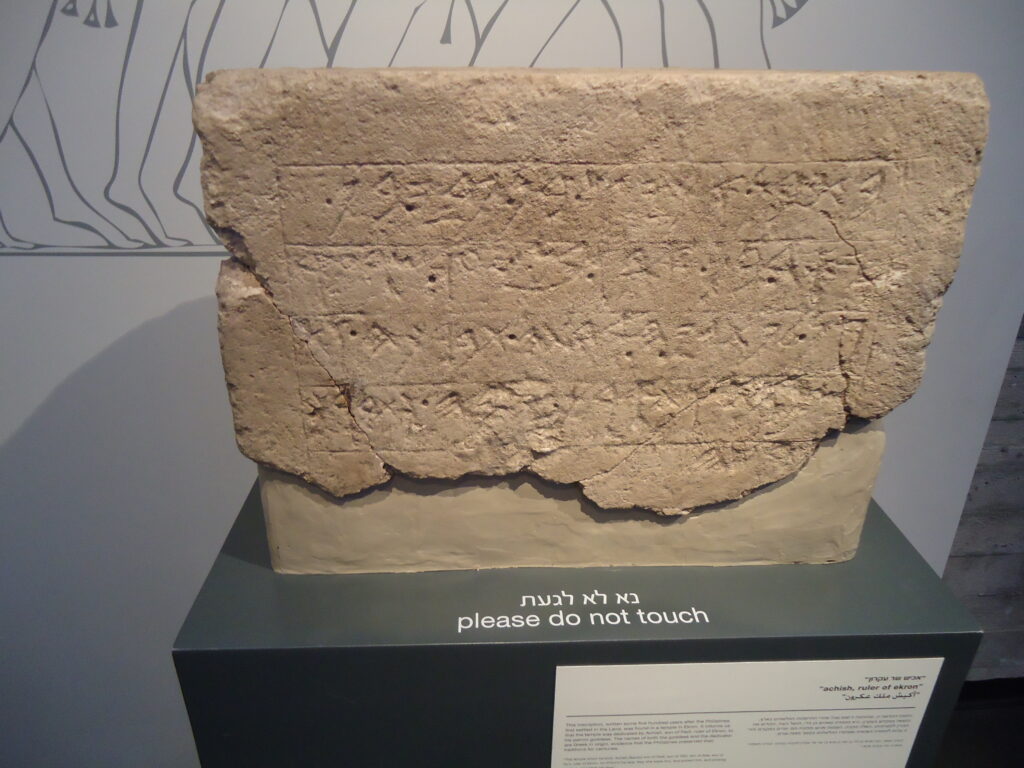
2 KINGS · BEFORE HELL, THERE WAS EKRON
The first important biblical reference appears in 2 Kings 1.
King Ahaziah of Israel falls through a lattice and is injured. He then sends messengers to consult Baal-Zebub, the god of Ekron, to find out whether he will survive.
The text presents Baal-Zebub as a deity associated with Ekron, a Philistine city. It does not yet describe him as the Prince of Demons or as a subordinate of Satan.
This means that Beelzebub’s starting point is not an infernal hierarchy.
It is the world of local deities in the ancient Levant.
The name Baal-Zebub has traditionally been translated as ‘Lord of the Flies’, although the history of the name and its later variants—particularly Beelzebul—is more complex.
That is where the transformation begins.
Before the name entered demonology, 2 Kings presented Baal-Zebub as the god of Ekron.
THE GOSPELS · THE NAME CHANGES FUNCTION
Here the Prince of Demons appears
Centuries after 2 Kings, the name reappears in the Gospels, but its function has changed completely.
In Mark 3:22, scribes who have come from Jerusalem accuse Jesus of being possessed by Beelzebul and claim that he casts out demons through the power of the prince of demons. Versions of the same accusation appear in other Gospel accounts, such as Luke 11:15.
We are no longer dealing with the ‘god of Ekron’ consulted by Ahaziah.
Beelzebul now appears within the world of demons and holds authority over them.
Jesus’s response makes that association clearer still. Answering the accusation, he asks how Satan could cast out Satan and argues that a kingdom divided against itself cannot stand. The name Beelzebul is thus placed within the language of satanic power and the demonic kingdom.
This is one of the major shifts examined in this article:
Baal-Zebub was presented as the god of Ekron. Beelzebul now appears as a ruler of demons.
Centuries and a radical change of function separate the two texts.
Another question remains: are Baal-Zebub and Beelzebul exactly the same name, or is the name’s transformation also part of the story?
ONE NAME, SEVERAL FORMS
The flies may not have been there at the beginning
The name has a history of its own.
In 2 Kings we find Baal-Zebub, a form that can literally be understood as ‘Lord of the Flies’. Scholars have long debated, however, whether this was the name’s original form or a derogatory alteration of a different title.
The question becomes particularly interesting when we reach the New Testament. The form Beelzebul has strong support in the Greek textual tradition, while Beelzebub also appears as a variant in transmission and later translations. The difference is not trivial: it may affect how we reconstruct the name’s history.
One of the main explanations connects zebul with ideas such as ‘prince’, ‘lord’ or ‘dwelling’, drawing also on known titles of the god Baal in Ugaritic texts. From this perspective, Baal-Zebub—‘Lord of the Flies’—may preserve a polemical distortion of a more honourable title.
We cannot turn that hypothesis into absolute certainty. The etymology remains disputed.
But we can make an important point:
‘Lord of the Flies’ does not, by itself, explain the entire history of the name Beelzebub.
Baal-Zebub, Beelzebul and Beelzebub belong to a process of transmission in which language, translation, religious polemic and later tradition overlap.
When the name changes, the figure changes too.
What denoted a deity at Ekron becomes one of the most recognisable names of demonic power.
SATAN OR BEELZEBUB
Are these two names for the same figure?
The Gospels bring Beelzebul and Satan very close together, but we should not erase the distinction between the two names.
In Mark 3:22, the scribes accuse Jesus of casting out demons through Beelzebul, the prince of demons. Jesus immediately responds by asking: ‘How can Satan cast out Satan?’ He then speaks of a kingdom divided against itself.
Something similar happens in Luke 11. The accusation names Beelzebul as ruler of the demons, while Jesus’s response shifts to the kingdom of Satan.
The relationship is clear.
Beelzebul belongs to the same sphere of demonic power as Satan and holds authority within it.
But the text does not set out a precise doctrine according to which ‘Beelzebul’ is simply another personal name for Satan in every context.
That identification will become much stronger in later tradition, where Beelzebub and Satan may appear almost merged in some accounts and as distinct figures within a hierarchy in others.
Here we encounter a problem that will recur throughout THE ARCHIVE:
the hierarchies of Hell are not uniform.
One text may call Beelzebub the prince of demons. Another may place him below Lucifer or Satan. Another may give him a different function.
We should therefore not ask which of those hierarchies is ‘the true one’.
We should ask:
which text is constructing it?
THE GRIMOIRES REDRAW THE MAP
In each book, he occupies a different throne
When Beelzebub enters the grimoires, he does not receive one definitive position.
The Grimorium Verum organises its hierarchy around Lucifer, Beelzebuth and Astaroth as its principal powers. Beelzebub is no longer simply the ‘prince of demons’ in the Gospel accusation: he belongs to a magical structure with subordinate spirits and functions of his own.
Another hierarchy transmitted in grimoire literature presents Lucifer as emperor, Beelzebub as prince and Astaroth as grand duke. Beneath them appear figures such as Lucifuge, Satanachia, Agaliarept, Fleurety, Sargatanas and Nebiros.
In the nineteenth century, the Dictionnaire Infernal reorganises the picture again. Collin de Plancy calls Beelzebub prince of demons and records traditions that even present him as the supreme leader of the infernal empire.
The result is revealing.
In some sources, Beelzebub is closely associated with Satan.
In others, he holds a position below Lucifer.
Elsewhere, he appears as one of Hell’s highest powers.
There is no single infernal organisational chart that has remained intact for centuries.
Each grimoire inherits earlier names and uses them to draw its own map.
Beelzebub is one of the clearest examples of that instability.
WHAT THE SOURCE ACTUALLY SAYS
The same name does not mean the same thing in every period
Beelzebub’s history only becomes intelligible when we stop reading all the sources as though they described the same figure.
In 2 Kings, Baal-Zebub appears as the god of Ekron consulted by King Ahaziah.
In the Gospels, Beelzebul already belongs to the demonic realm and appears as the prince of demons.
In the later grimoires, Beelzebub receives different positions in different systems: a great infernal power, a prince, a figure closely associated with Satan or a member of a hierarchy alongside Lucifer and other names.
And in the Dictionnaire Infernal of the nineteenth century, we find yet another reorganisation, now accompanied by an iconography that will help establish his modern appearance.
We are therefore not looking at a single description transmitted unchanged.
We are looking at a sequence:
deity of Ekron → demonised name → prince of demons → power within infernal hierarchies.
Even the name changes along the way:
Related forms appear in different linguistic and textual traditions: Baal-Zebub, Beelzebul, Beelzebub and, in Spanish, Belcebú. These should not be understood as a perfectly linear chronological chain, but as variants transmitted and reinterpreted in different contexts.
That linguistic and religious transformation is part of the figure.
Beelzebub does not arrive in Hell with a finished identity. Each period rewrites his name and his place.
WHAT CHANGED LATER
When ‘Lord of the Flies’ came to obscure the rest of the story
Over time, one translation came to dominate the popular image of Beelzebub: ‘Lord of the Flies’.
The expression is powerful, visual and memorable. That is precisely why it came to displace much of the name’s more complex history.
Beelzebub became increasingly associated with flies, corruption, filth, disease and putrefaction. Later literature, demonology and iconography reinforced these associations until they became almost inseparable from the figure.
But reducing the whole story to flies creates a problem.
The biblical form Baal-Zebub, the Gospel variant Beelzebul and the later forms Beelzebub and Belcebú do not allow us to reconstruct a single etymology with absolute certainty.
What we can document is the historical outcome: the name of a deity associated with Ekron acquired increasingly negative and, eventually, demonic meanings.
When later grimoires and demonologies inherit Beelzebub, they receive more than an ancient name.
They receive centuries of religious polemic, translations, reinterpretations and visual associations.
The ‘Lord of the Flies’ we now recognise instantly is therefore only one of the latest layers in a much longer history.
The flies remained. Ekron almost disappeared.
MYTH VS SOURCE
The problem is not the flies: it is the chronology
There is a very easy way to distort Beelzebub’s history: take his latest image and impose it on every earlier source.
That turns the god of Ekron, the Beelzebul of the Gospels and the infernal prince of the grimoires into a single figure who supposedly never changed.
But the sources tell a different story.
In 2 Kings, Baal-Zebub belongs to Ekron. Ahaziah sends messengers to consult him as a deity. There is no infernal throne yet, no legions and no court of demons.
In the Gospels, the setting is entirely different. Beelzebul appears as an authority over demons and is closely associated with Satan’s power.
The later grimoires take another step: they place him within more complex hierarchies, assign him specific positions and situate him sometimes alongside Lucifer and sometimes within different schemes.
Even the famous flies are part of the problem. The reading ‘Lord of the Flies’ is associated with the form Baal-Zebub, but the name’s variants show that its linguistic history is more complicated than its modern epithet suggests.
The mistake, then, is not calling Beelzebub the ‘Prince of Demons’. Some texts do so.
The mistake is claiming that he always was.
Ekron, the Gospels and the grimoires do not describe the same stage in Beelzebub’s history. They show how he changed.
THE ARGUMENT
Beelzebub changed worlds before changing rank
Beelzebub’s history is not that of a figure who always retains the same identity.
It begins in Ekron, where Baal-Zebub appears as a deity consulted by a king.
He reappears centuries later in the Gospels, now within the language of demonic power and as an authority over other demons.
Later, grimoires and demonological treatises incorporate him into still more elaborate structures, giving him titles, subordinates and different positions according to each system.
Even the name circulates in different forms depending on the language, text and tradition: Baal-Zebub, Beelzebul, Beelzebub and Belcebú.
There is no straight line.
There is translation, religious polemic, demonisation and reorganisation.
Beelzebub is therefore especially useful for understanding how THE ARCHIVE works: a figure may retain a recognisable name while almost everything that name means changes.
The question is not which rank Beelzebub held ‘from the beginning’. It is who gave him each rank, in which text and in which period.
That is the argument of this article:
before occupying a throne in Hell, Beelzebub had to leave Ekron and pass through centuries of reinterpretation.
ARCHIVE CONNECTIONS
Beelzebub’s story does not end in Ekron
Who built Hell?
Beelzebub fits directly into the question that opened THE ARCHIVE: who decided which names held which offices in Hell? His history shows that the hierarchies were not inherited intact; they were constructed, corrected and reorganised over centuries.
THE GRAND GRIMOIRE, BEYOND THE LEGEND
‘The Grand Grimoire, beyond the legend’ shows Beelzebub within a fully infernal system, associated with Lucifer, Lucifuge and a structure of pacts and authority very different from what we find in 2 Kings or the Gospels.
THE PACT HAS A NAME: LUCIFUGE ROFOCALE
Lucifuge offers another route through the investigation. ‘The pact has a name: Lucifuge Rofocale’ examines what happens when hierarchies do more than name great powers and begin assigning specific functions within infernal government.
GRIMOIRE OF BEELZEBUB
This article reconstructs the name’s history and its changes of function. The Grimoire of Beelzebub builds on that documentary foundation in a dedicated volume, distinguishing its ancient origins from later demonological and occult layers.
CONTINUE
From Ekron to the Grimoire of Beelzebub
This article has traced Beelzebub’s development from Baal-Zebub, the god of Ekron, through Beelzebul as the prince of demons, to his incorporation into increasingly complex infernal hierarchies.
The Public Edition of the Grimoire of Beelzebub continues from there, organising his development, names, functions, symbols and traditions in a dedicated volume.
The Illustrated Edition extends that exploration with more comprehensive visual, documentary and ritual treatment.
SOURCES CONSULTED
Documents and studies used
- 2 Kings 1:2–16. Passage presenting Baal-Zebub as the god of Ekron, consulted by King Ahaziah to learn whether he will survive his injuries.
- Mark 3:22–26; Matthew 12:24–27; Luke 11:15–18. Gospel passages presenting Beelzebul as ruler or prince of demons, while Jesus’s response places the accusation within the language of Satan’s kingdom.
- Ekron Royal Inscription, seventh century BCE. Inscription found at Tel Miqne-Ekron, explicitly identifying the city and its rulers. It does not mention Baal-Zebub, but provides direct archaeological evidence for Philistine Ekron. The inscription is dated to the seventh century BCE and is held by the Israel Museum.
- New American Bible Revised Edition · 2 Kings 1:2, note. The note explains the form Baalzebub as a derogatory alteration related to Baalzebul and documents the historical question surrounding the name.
- Grimorium Verum. A grimoire whose upper hierarchy is organised around Lucifer, Beelzebuth and Astaroth, with subordinate spirits assigned to those powers.
- Grand Grimoire. A grimoire tradition in which Lucifer appears as emperor, Beelzebub as prince and Astaroth as grand duke, presenting a different hierarchy from the Grimorium Verum.
- Jacques-Albin-Simon Collin de Plancy. Dictionnaire Infernal, sixth edition, Paris, H. Plon, 1863. The Belzébuth entry presents him as prince of demons and brings together divergent traditions about his position in the infernal hierarchy.
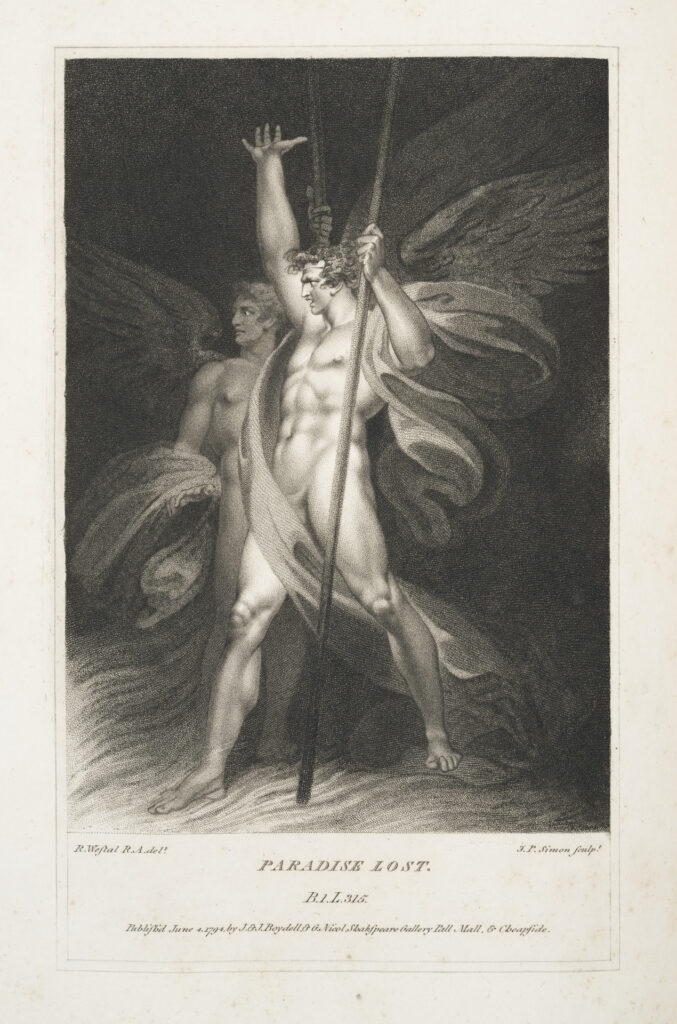
- John Milton. The Poetical Works of John Milton, with a Life of the Author by William Hayley, Boydell edition, 1794–1797; vol. II dated 1795. Bibliographical context of the illustration Two Eminent Devils: Satan and Beelzebub used in this article; Wikimedia Commons dates the print to 1794.
Source records
Explore the references, their limitations and their uses in other readings. The article’s full bibliography is retained in the text above.
Ekron Royal Inscription ↗2 Kings 1:2–16 ↗Mark 3:22–26; Matthew 12:24–27; Luke 11:15–18 ↗Dictionnaire Infernal, sixth edition ↗Grimorium Verum ↗Le Grand Grimoire — Paris, 1845 ↗The Poetical Works of John Milton, with a Life of the Author by William Hayley (Boydell edition) ↗2 Kings 1:2, note ↗“Two Eminent Devils: Satan and Beelzebub” ↗Study this subject further
These related lessons let you explore the article’s questions through activities and study resources.
Cite this article
Published in The Method Files’ Archive.
BEELZEBUB WAS NOT BORN IN HELL. The Archive · The Method Files. https://themethodfiles.com/en/estudios/archivo/belcebu-no-nacio-en-el-infierno/
Include your access date; the copy button adds it automatically. To cite a historical source, use its own reference in the article’s bibliography.
Explore the six free lessons · Explore the Studies programme

From article to book
Would you like to explore Beelzebub further?
Continue with the sources concerning Ekron, the Gospels and grimoires, comparative workshops and sixteen contemporary operations.
127 pages · PDF in English · Book independent of the course
Explore the book and read a sample