
THE ARCHIVE · ARCH-11
FROM THE PSEUDOMONARCHIA TO THE GOETIA
The list changed
THE METHOD FILES
THE ARCHIVE
It was not 69 + 3: transmission, omissions, additions and the new order of the Ars Goetia.
Today, the Ars Goetia is often presented as a fixed list: seventy-two spirits, each with a number, rank, functions and seal. The format seems so stable that it is easy to imagine this list surviving unchanged from remote antiquity.
The documents tell a different story.
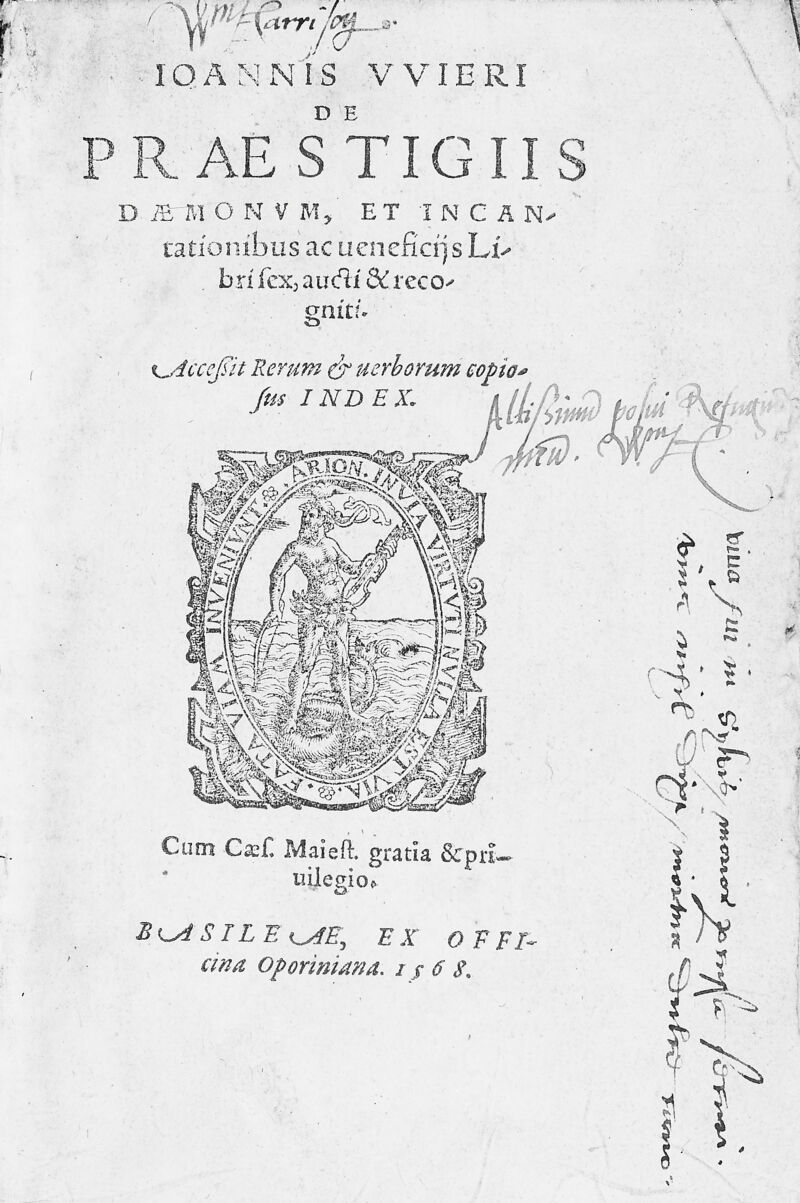
In 1577, the fifth edition of Johann Weyer’s De praestigiis daemonum included a catalogue known as the Pseudomonarchia Daemonum. It contains sixty-nine entries. Seven years later, Reginald Scot published an English version of much of that catalogue. Subsequently, the manuscript tradition of the Lemegeton reorganised the catalogue into the Ars Goetia with its seventy-two spirits.
But this did not happen by adding three names.
Between the two lists, we find an omission, four additions, numerous changes of position, variants arising from translation and a decisive visual transformation: individual seals.
This article does not ask which list is ‘the true one’. It asks a more useful question: what happened to the text as it travelled?
THE FIRST CORRECTION
It was not 69 + 3
The best-known difference seems straightforward: Weyer has 69 spirits and the Ars Goetia has 72.
The actual arithmetic is different.
Comparing the two lists reveals 68 spirits in common. Pruflas — also transmitted as Bufas — appears as number 4 in Weyer, but does not reach the Goetia. The Goetia, meanwhile, includes four names absent from the Pseudomonarchia: Vassago, Seere, Dantalion and Andromalius.
The transformation can therefore be expressed as follows:
69 in Weyer − Pruflas = 68 shared entries. 68 + Vassago + Seere + Dantalion + Andromalius = 72.
This detail changes the question entirely. We are not looking at a shorter list with three names appended at the end. We are looking at a catalogue that underwent losses, additions and a more thorough reworking.
Another detail matters: Pruflas is already missing from the English version published by Reginald Scot in 1584. We therefore cannot claim that the compiler of the Goetia chose to remove him. The compiler may have inherited a textual branch in which that entry had already disappeared.
1577 · WEYER
The list appeared in a book that was not a Goetia manual
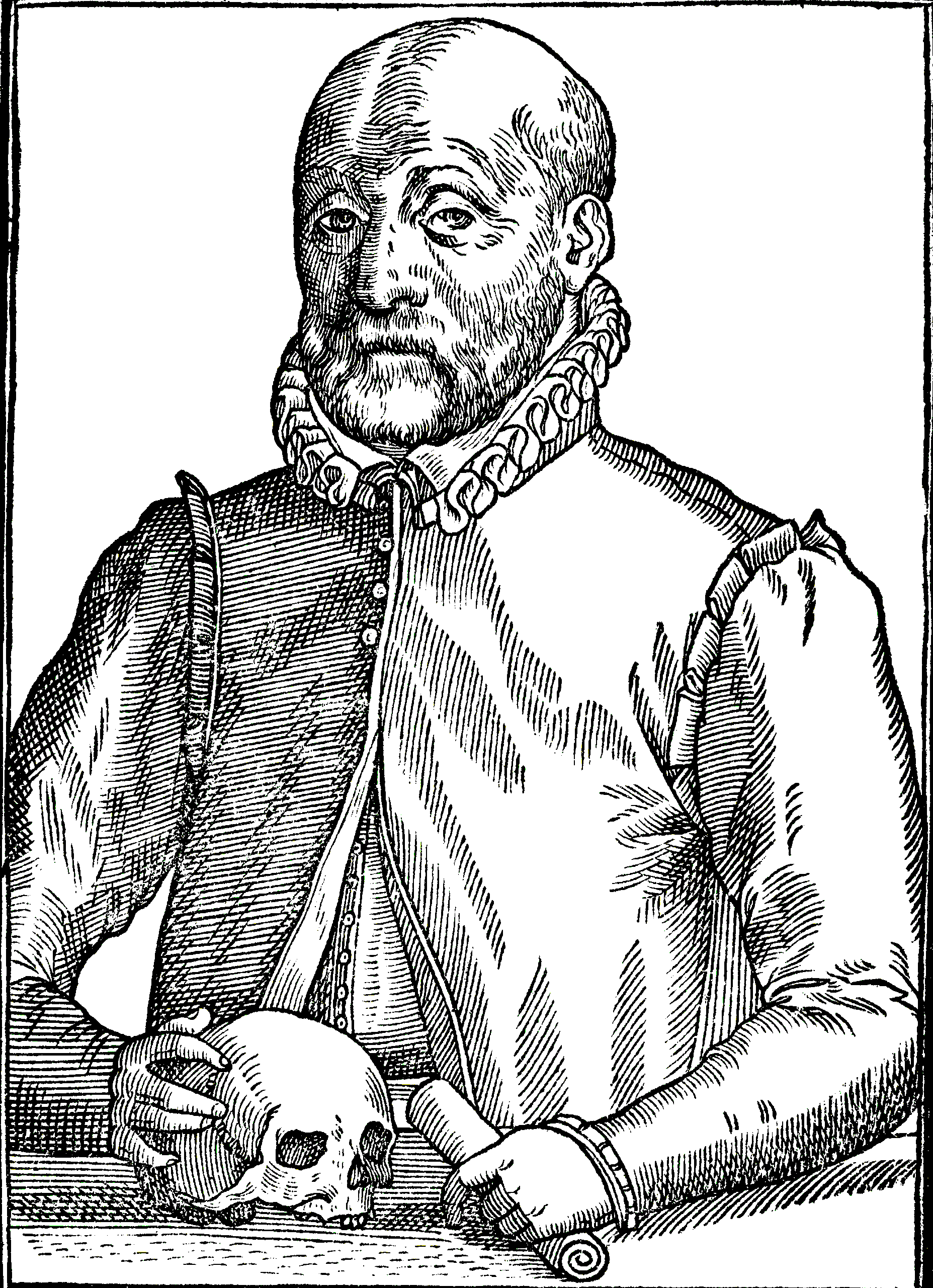
De praestigiis daemonum first appeared in 1563. Weyer revised and expanded the work in later editions, and the fifth edition of 1577 explicitly announces the Pseudomonarchia daemonum among its contents.
Context matters.
Weyer was not publishing a modern edition of the Ars Goetia. His work belonged to a much broader debate about demons, magic, witchcraft and persecution. Modern research on Weyer has shown how controversial De praestigiis was: a work revised across successive editions and connected with his criticism of many witchcraft accusations.
Nor did the Pseudomonarchia emerge from nowhere. Weyer presents his material as deriving from a Liber officiorum spirituum, a ‘book of the offices of spirits’. This places his catalogue within an earlier textual family.
The year 1577 therefore does not mark the birth of all these names. It is a secure date for a particular printed version of a tradition already in circulation, which would continue to change.
1584 · SCOT
The English translation left its marks on the list
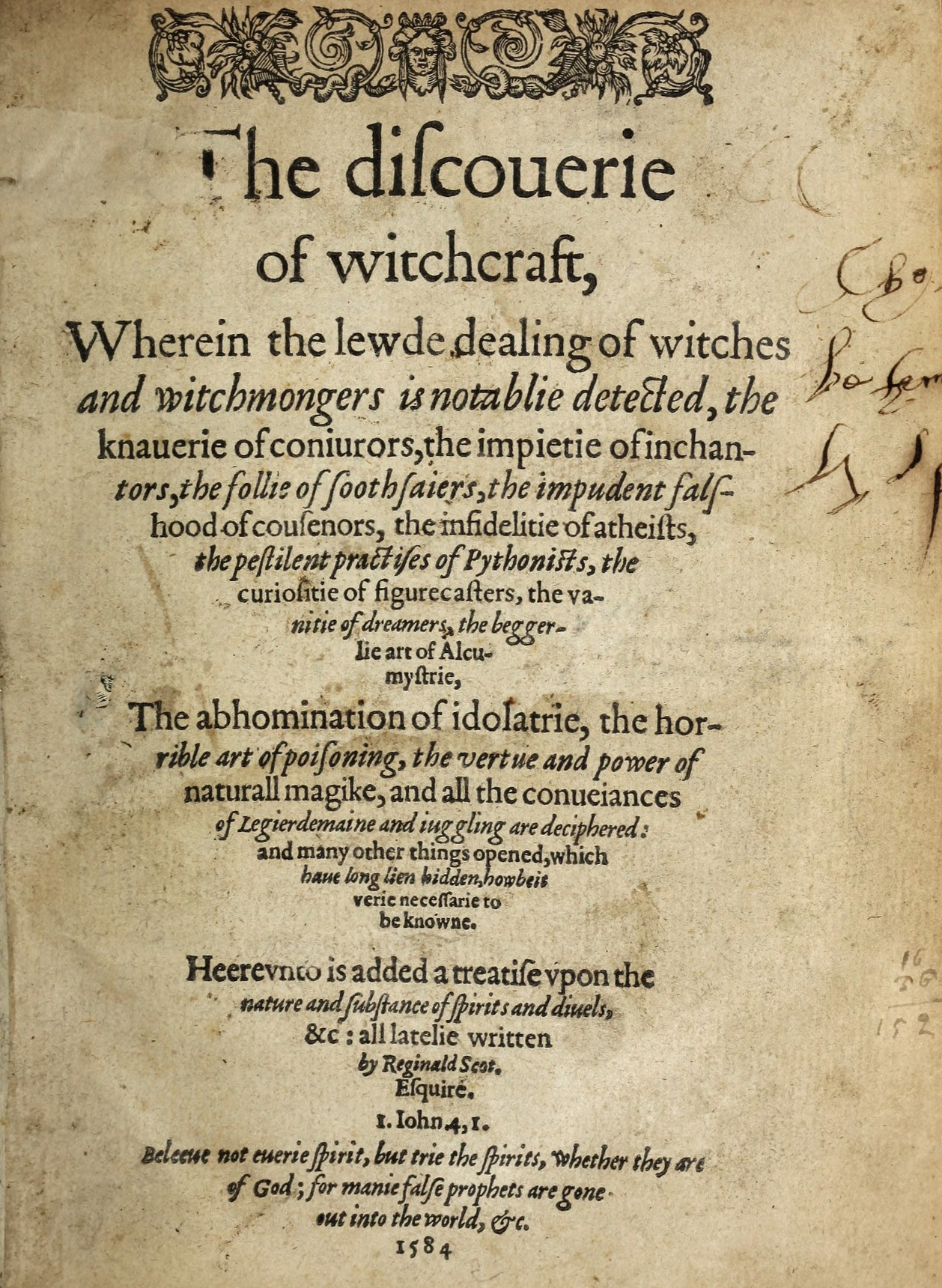
In 1584, Reginald Scot published in London The Discoverie of Witchcraft. It includes an English version of the catalogue transmitted by Weyer.
This step is crucial because the Ars Goetia preserved in the manuscripts of the Lemegeton shares readings, omissions and problems with the English branch that are harder to explain if we imagine an independent, accurate copy of the Latin.
The most conspicuous example is Pruflas: present in Weyer, absent from Scot.
Other details show that translation is more than a change of language. In some passages, a word, a direction or a graphic sign is interpreted differently, and that reading may continue into later copies. Joseph H. Peterson has used precisely these correspondences to demonstrate the close relationship between the Goetia and Scot’s English transmission.
Attributing this translation to Abraham Fleming is plausible and appears in specialist research, but we should not treat it as more certain than the documents allow. For this article, it is enough to establish what is secure: an English bridge exists in 1584, and it leaves traces that reappear later.
SEVENTEENTH CENTURY · REORDERING
The same names no longer occupy the same positions
The most conspicuous transformation in the Ars Goetia is not the increase from 69 to 72. It is the order.
Bael and Agares remain at the beginning, but the sequence then changes dramatically. A few examples make this clear:
Gamygyn/Gamigin moves from 47 in Weyer to 4 in the Goetia. Zaleos/Saleos moves from 65 to 19. Belial moves from 23 to 68. Stolas moves from 69 to 36.
These are not minor shifts caused by slightly different numbering. The list has been reorganised.
Here we encounter one of the most important limits of the research: no note survives in which the compiler explains the organising principle. We do not know why Belial ended up at 68, why Gamigin moved up to 4 or what specific rule determined the entire new sequence.
Later theories exist. A documented explanation does not.
Any modern system presenting the order of the 72 as eternal, original or fully deciphered should therefore be treated cautiously. The order we know is also a product of publishing history.
FOUR ARRIVE · ONE DISAPPEARS
New entries do not necessarily mean sudden invention
Vassago appears as number 3 in the Goetia. Seere, Dantalion and Andromalius close the list at positions 70, 71 and 72.
None of these four appears in Weyer’s Pseudomonarchia.
That does not automatically mean that a single compiler invented them.
All four added names are absent from both Weyer and Scot. For Seere, Joseph H. Peterson identifies a possible parallel in Sloane MS 3824. Vassago has a similar name in the Folger manuscript, but Peterson cautions that the descriptions do not match. For Dantalion and Andromalius, the sources consulted do not establish an immediate origin with comparable certainty. ‘Absent from Weyer’ therefore does not mean ‘invented by the compiler of the Goetia’.
The conclusion is more interesting than a quick answer.
The Goetia appears to have been compiled in an environment where several catalogues, offices of spirits and ritual materials circulated. The list could draw on more than one textual branch.
VARIANTS
A translation can also change what a spirit does
The changes affect more than names and numbers.
Differences in function, rank and description emerge in transmission. Naberius offers a particularly revealing example. In Weyer and Scot, the passage concerns the loss of dignities; in the later Goetia tradition, it circulates as the ability to restore lost dignities and honours.
The direction associated with Paimon provides another example of a reading shifting in translation and then becoming established in a later branch.
These details are small compared with the whole list, but their implication is substantial: when a modern edition says that a spirit ‘does X’, we must ask exactly which textual witness supplies that function.
Rank, office and description do not exist outside the history of the text either.
Demonology that compares sources can reveal variants. Demonology that erases them creates a false uniformity.
THE SEALS
Weyer describes; the Goetia also depicts
One visual difference seems unremarkable today because it has become inseparable from the Goetia in popular culture: the seals.
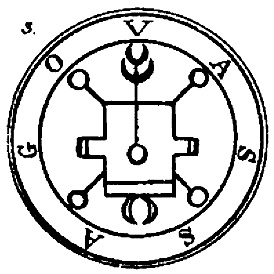
Weyer’s Pseudomonarchia does not assign its entries the individual system of seals now associated with the 72 spirits.
The Ars Goetia in manuscript form does transmit a ‘seal’, ‘mark’ or ‘character’ for each spirit, incorporating it into the presentation.
This does not justify claiming that someone invented all the seals at once, or that we can identify their creator today. Their precise genealogy still requires research.
It does, however, establish a clear documentary distinction:
Weyer’s description and the goetic seal do not belong to the same textual layer.
This distinction connects directly with ‘Who decided what demons look like?’. Just as a nineteenth-century engraving cannot be presented as a biblical or medieval portrait of a demon, a seal preserved in the Goetia tradition should not automatically be projected back onto Weyer or earlier sources.
BEFORE WEYER
The tradition was larger than either list
If we stopped the story at 1577, Weyer would appear to have created the catalogue. The manuscripts require us to go further back.
The Livre des esperitz, preserved in Trinity College Cambridge MS O.8.29, contains a French list of spirits with ranks, forms, functions and legions that bears clear relationships to the later tradition. Specialists have debated its precise dating: the uncertainty itself is a reason not to turn it into a convenient ‘original’.
Other manuscripts of ritual magic, including material held in Munich and at the Folger Shakespeare Library, contain related names and structures.
Jean-Patrice Boudet placed the Livre des esperitz and the Pseudomonarchia within a tradition of demonological lists with medieval antecedents. This challenges another frequently repeated idea: Weyer and the Goetia do not form an isolated chain of just two links.
They are two important witnesses within a broader family.
The exact genealogy of all these manuscripts remains an open question. What we can reject is the image of a single original list passing unchanged from hand to hand.
MYTH VS SOURCE
‘The 72 demons of the Goetia were always those same 72’
We cannot substantiate that claim.
The documents show a printed stage with 69 entries in Weyer, an English branch in which Pruflas is already missing, and a later goetic tradition with 72 positions, four names absent from Weyer and a thoroughly reorganised order.
Nor does the Goetia itself exist as one perfect manuscript. The surviving witnesses contain variants.
The number 72 therefore belongs to a particular historical configuration of the tradition, rather than to an immutable list demonstrable from the outset.
We also do not know for certain why precisely 72 was chosen. Numerological and kabbalistic hypotheses exist, but rigorous research must distinguish a plausible explanation from a decision documented by the compiler.
Until such evidence appears, the accurate formulation is straightforward:
We know that the list ended up with 72 entries. We do not know why with the same degree of certainty.
CONCLUSION
A list of demons has a publishing history too
Between Weyer’s Pseudomonarchia and the Ars Goetia, more than a number changed.
The language changed. The sequence changed. One entry disappeared. Four were added. Some functions were reinterpreted. The tradition incorporated individual seals. And manuscripts continued to produce variants afterwards.
The important question is therefore not ‘which list is authentic?’
It is: which document are we reading, from what date, in which language and within which branch of transmission?
This method changes how we read grimoires. Names cease to be fixed components of a supernatural hierarchy and become what they also are historically: words copied, translated, reorganised and reinterpreted by particular people over centuries.
The list changed.
And precisely because it changed, we can study it.
ARCHIVE CONNECTIONS
Tracing transmission
WHO BUILT HELL?
Direct background: explains how demonological catalogues construct and reorganise hierarchies.
BELIAL: WHEN A WORD BECAME A KING
A specific case: Belial moves from position 23 in Weyer to 68 in the Goetia.
THE GRAND GRIMOIRE, BEYOND THE LEGEND
A methodological connection: dating, transmission and the difference between a book’s claims about itself and what its editions document.
WHO DECIDED WHAT DEMONS LOOK LIKE?
A visual connection: textual description, seal and later image do not belong to the same historical layer.
CONTINUE
From the historical catalogue to the collection
This article shows why names, ranks and seals must be read within a particular textual tradition. The Public Editions allow you to continue from that documentary foundation into the volumes of the collection.
To explore the complete seven-volume collection, the Library brings the illustrated editions together in one place.
LESSONS AND SOURCES
From textual transmission to a method that can be checked
This article documents a list that changes as it passes through printed editions, English translation and manuscript transmission. Studies turns that comparison into a method: identify the textual witness, distinguish branches of transmission and keep each conclusion within the limits of the documents.
- MANUSCRIPTS, EDITIONS AND TRANSMISSION: distinguish manuscript, transcription, edition, translation, reproduction and digitisation.
- WHAT A SOURCE CAN ACTUALLY ESTABLISH: distinguish documented fact, inference and the limits of the evidence.
- TEXTUAL RELATIONSHIPS AND CONTAMINATION: examine variants and relationships between branches of transmission.
The Source records linked below provide access to the documents used in the comparison. The final bibliography also brings together the other works and studies cited.
- Joseph H. Peterson · Lemegeton / Ars Goetia: a comparative transcription for examining variants, order and the relationship with Weyer and Scot’s tradition.
- Mathers–Crowley · The Book of the Goetia · 1904: a modern printed form of the Goetia and a reference for the seals’ circulation in print.
SOURCES CONSULTED
Documents and studies used
- Johann Weyer · De praestigiis daemonum, fifth edition (1577) Printed primary source. The title page of the 1577 edition documents the inclusion of Pseudomonarchia daemonum. View source.
- Reginald Scot · The Discoverie of Witchcraft (1584) Primary source for the English transmission of Weyer’s catalogue. View source.
- Joseph H. Peterson · Pseudomonarchia Daemonum Modern comparative edition of the Weyer/Scot text; useful for comparing names, order and anomalies. View source.
- Joseph H. Peterson · Lemegeton, Part 1: Goetia Transcription of Sloane MS 3825 with variants from other manuscripts; a basis for comparing the Goetia witnesses. View source.
- British Library · Sloane MS 3825 Institutional record of the manuscript Peterson uses as his principal witness. View source.
- Trinity College Cambridge · MS O.8.29, Livre des esperitz A witness related to the family of demonological catalogues preceding or circulating alongside Weyer; its precise dating is debated. View source.
- Jean-Patrice Boudet · ‘Les who's who démonologiques de la Renaissance et leurs ancêtres médiévaux’ (2003) Academic study of the Livre des esperitz, Weyer and their medieval antecedents. View source.
- Michaela Valente · Johann Wier: Debating the Devil and Witches in Early Modern Europe (2022) Modern scholarly context for the publishing history of De praestigiis daemonum and Weyer’s thought. View source.
Source records
Explore the references, their limitations and their uses in other readings. The article’s full bibliography is retained in the text above.
Joseph H. Peterson — Lemegeton Clavicula Salomonis / Ars Goetia ↗The Book of the Goetia of Solomon the King ↗Johann Weyer · De praestigiis daemonum, fifth edition (1577) ↗Reginald Scot · The Discoverie of Witchcraft (1584) ↗Johann Weyer — De praestigiis daemonum / Pseudomonarchia Daemonum ↗Goetia — Peterson’s digital edition ↗Sloane MS 3825 ↗Trinity College Cambridge · MS O.8.29, Livre des esperitz ↗Boudet — Renaissance and medieval demonological repertoires ↗Michaela Valente · Johann Wier: Debating the Devil and Witches in Early Modern Europe (2022) ↗Study this subject further
These related lessons let you explore the article’s questions through activities and study resources.
Cite this article
Published in The Method Files’ Archive.
FROM THE PSEUDOMONARCHIA TO THE GOETIA: THE LIST CHANGED. The Archive · The Method Files. https://themethodfiles.com/en/estudios/archivo/pseudomonarchia-ars-goetia-lista-cambio/
Include your access date; the copy button adds it automatically. To cite a historical source, use its own reference in the article’s bibliography.
Explore the six free lessons · Explore the Studies programme